
Today, I'm sharing the exact 7-part blueprint that helped five of my mentees land tenure-track interviews at top universities
4 June 2025
Read time: 3 minutes
Supporting our sponsors directly helps us continue delivering valuable content for FREE to you each week — your clicks make a difference!
FREE Webinar: Research Identity to Secure Job Secrets - Wed 18 June
I'm revealing why brilliant researchers can't explain what they do and lose job opportunities.
FREE webinar next Wednesday: 'The Research Identity Crisis: Why You Can't Explain What You Do.'
After seeing researchers fail the 60-second test in interviews, I'm sharing the identity framework that gets you hired.
Limited spots -> Registre for free here.
Writing a research statement that actually gets you an interview can feel like solving a puzzle without seeing the picture.
Most PhD students and postdocs spend weeks crafting detailed research plans that hiring committees barely read.
Why? Because they're missing key elements that committees specifically look for.
Today, I'm sharing the exact 7-part blueprint that helped five of my mentees land tenure-track interviews at top universities.
This simple framework will transform your research statement from a document that gets skimmed to one that gets you shortlisted..

When I applied for my first faculty positions, my research statement was technically perfect but got zero interview requests.
After serving on three search committees and interviewing 15 faculty who regularly review applications, I discovered what works and what doesn't.
The key insight?
Search committees spend an average of just 7 minutes reading research statements, looking for specific elements that most candidates never include.
I completely rewrote my statement using this blueprint and received four interview offers from my next five applications.
Element #1: The "So What?" Statement
Most research statements begin with technical details. Winning statements start by explaining why your research matters.
How to do it: In your first paragraph, clearly answer: "Why should anyone care about this research?"
Use plain language to explain how your work solves real problems that matter to people outside your specialty.
Example: Instead of "I study protein folding mechanisms in cellular environments," write "My research helps solve how misfolded proteins cause diseases like Alzheimer's, potentially leading to new treatments that could help millions of patients."
Element #2: The Visual Roadmap
Most statements contain only text.
Winning statements include a visual overview of your research program.
How to do it: Create a simple diagram showing how your past, current, and future research connect.
Use colours, arrows, and brief labels to show the big picture at a glance.
Element #3: The Funding Blueprint
Most statements discuss research ideas without mentioning money.
Winning statements identify specific funding sources.
How to do it: Name 3-5 specific grants you plan to pursue, with brief notes on why your work fits their priorities.
Include both large (NIH, NSF, UKRI, EU) and smaller foundation grants to show you've done your homework.
Element #4: The Collaboration Hook
Most statements focus only on your work.
Winning statements highlight potential collaborations with faculty at the target department.
How to do it: Research the department before writing.
Name 2-3 specific faculty members and explain exactly how your research could connect with theirs.
This shows you're thinking like a colleague, not just a job seeker.
Element #5: The Student Project Generator
Most statements forget to mention how students fit into your research.
Winning statements show you can create meaningful projects for students.
How to do it: Include a short section outlining 2-3 specific projects suitable for undergraduate and graduate students.
This shows you can be an effective mentor and teacher.
Element #6: The Facilities Connector
Most statements ignore practical needs.
Winning statements link research plans to existing facilities.
How to do it: Research what equipment and resources the department already has, then explain how you would use these specific facilities.
This shows your research is practical and ready to start.
Element #7: The Broader Impact Statement
Most statements focus only on academic impact.
Winning statements explain how your research benefits society, education, or diversity goals.
How to do it: Include a paragraph explaining how your research and teaching will contribute to broader goals like addressing societal challenges, improving education, or enhancing diversity in your field.
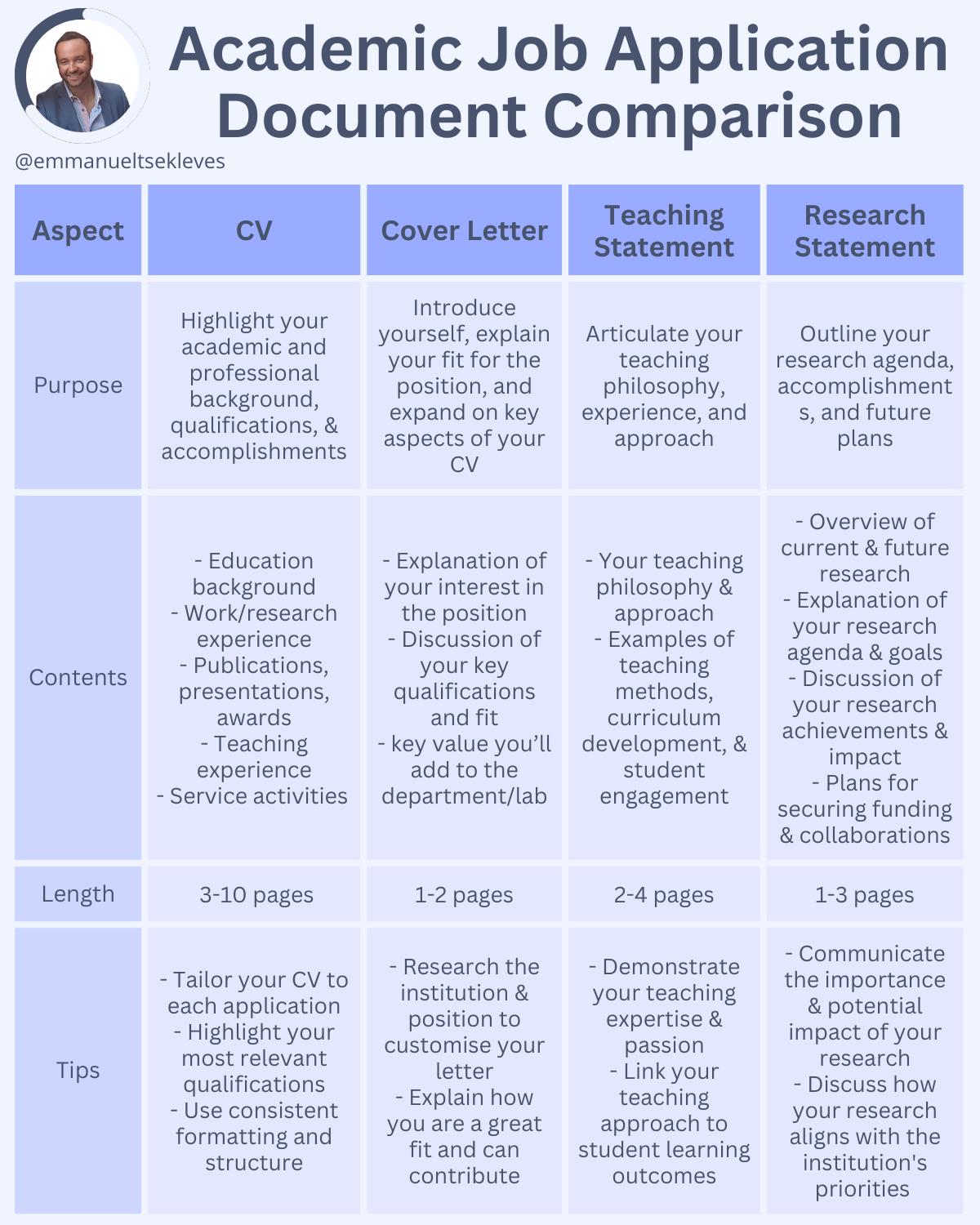
Key Takeaways:
- Start with why your research matters to people outside your specialty
- Include visual elements that show your research plan at a glance
- Name specific collaborators at the target department to show you've done your homework
-
→ Your Action Plan for This Week
- Draft your "So What?" statement that explains why your research matters in plain language
- Create a simple visual diagram showing how your research projects connect
- Research one department where you might apply and identify potential collaborators
Ready to transform your academic job applications?
Check out my Academic Job Accelerator program where I provide step-by-step guidance on creating application materials that actually get interviews.
Early bird pricing ends this Friday!
Well, that’s it for today.
See you next week.
Whenever you're ready, there are 3 ways I can help you:
1. Get free actionable tips on how to secure a tenure-track job in academia by following me on X, LinkedIn me Instagram and BlueSky
2. Take my proven Academic Job Accelerator Program that has helped hundreds of researchers secure academic positions, or start with my free training videos to learn the exact strategies hiring committees respond to.
3. If you're ready to take your PhD application journey to the next level, join my PhD Application and Scholarship Masterclass waitlist. Click the link below to learn more and secure your spot.
Responses