
Today, I'm sharing the 5-step system that helped me increase my citations by 347% in 18 months
23 April 2025
Read time: 3 minutes
Supporting our sponsors directly helps us continue delivering valuable content for FREE to you each week — your clicks make a difference!
Anara AI
Transform your literature review process with Anara AI - a powerful tool that helps researchers uncover key insights and research gaps in minutes rather than months.
Upload papers, ask targeted questions, and get immediate analytical summaries that highlight connections and opportunities in your field.
Try it free at anara.com or use my code EMMANUEL20 for 20% off.
You've spent years doing great research, but somehow others with seemingly less rigorous work get more citations and recognition.
The truth? Research quality alone rarely determines who gets noticed.
Today, I'm sharing the 5-step system that helped me increase my citations by 247% in 18 months.
These aren't tricks—they're strategic ways to ensure your valuable work gets the attention it deserves..

Early in my career, I watched in frustration as my papers went unnoticed while others became recognized names.
I interviewed 12 highly-cited researchers to uncover their strategies.
After implementing their approaches, my citations tripled and I received my first keynote invitation.
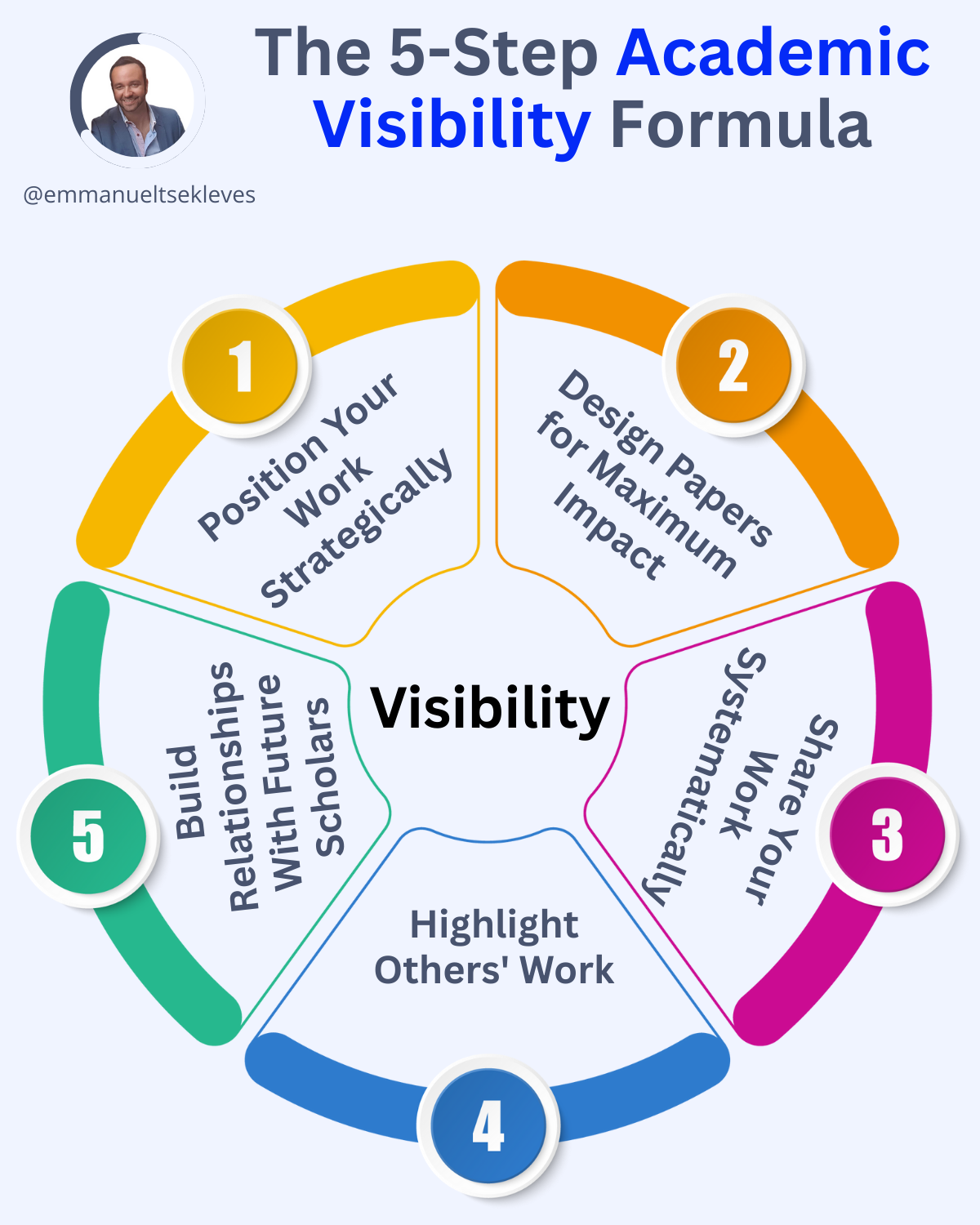
Step 1: Position Your Work Strategically
Most researchers focus purely on journal impact factors, but visibility starts before publication.
🚩 Action strategy: Before writing your next paper:
- Analyze the 3-5 most-cited papers in your subfield
- Notice how they structure titles and use keywords
- Connect your work to existing conversations rather than positioning it as entirely new
Step 2: Design Papers for Maximum Impact
Highly-visible researchers create papers that are easy to cite and share.
🚩 Action strategy: Include these elements in your next manuscript:
- A clear visualization that summarizes your key findings
- Methodology sections written specifically for others to reference
- A skimmable abstract with one question, three findings, and one implication
Step 3: Share Your Work Systematically
Don't just upload to ResearchGate and hope for the best.
🚩 Action strategy: Follow this sequence for each publication:
- Directly email 20-30 colleagues with personalized messages about how your findings relate to their work
- Create blog posts, social media threads, and visual summaries
Reach out to podcast hosts in your field - Submit related commentary to mainstream publications
Step 4: Highlight Others' Work
The paradoxical secret to gaining recognition isn't just promoting your research—it's thoughtfully highlighting others'.
🚩 Action strategy:
- Volunteer to write review articles that connect research threads
- Maintain a simple website with organized resources for your field
- Create a monthly "Research Roundup" highlighting important new studies
Step 5: Build Relationships With Future Scholars
The most cited academics cultivate connections with early-career researchers who represent future citation potential.
🚩 Action strategy:
- Highlight early-career work on social media
- Respond promptly to messages from graduate students
- Offer feedback on draft manuscripts from emerging scholars
Key Takeaways:
- Implement a systematic dissemination plan for each publication
- Strategically position your work within existing citation networks
- Develop your manuscripts with shareable, citation-worthy elements
- Build presence by thoughtfully curating and connecting others' work
-
→ Your Action Plan for This Week
This week, implement just one element of this visibility system:
- Create a shareable visualization from your recent research
- Analyze the 5 most-cited papers in your subfield
- Develop a plan to share your next publication
- Start highlighting others' work in your area
Well, that’s it for today.
See you next week.
Whenever you're ready, there are 3 ways I can help you:
1. Get free actionable tips on how to secure a tenure-track job in academia by following me on X, LinkedIn and Instagram.
2. Take my Academic Job Seekers Assessment quiz to receive personalised recommendations & discover my 6P Academic Job Accelerator Program.
3. If you're ready to take your PhD application journey to the next level, join my PhD Application and Scholarship Masterclass waitlist. Click the link below to learn more and secure your spot.
Responses