
Today, I'm sharing five proven email templates that consistently get responses from even the busiest professors, helping you build the connections that advance your career.
8 October 2025
Read time: 3 minutes
Supporting our sponsors directly helps me continue delivering valuable content for FREE to you each week. Your clicks make a difference! Thank you. Emmanuel
Get support in securing your next MBA, DBA or PhD Program
AdmitEase helps working professionals and researchers find flexible, accredited online programs, from MBAs and DBAs to PhDs and certificates.
Partnering with over 55 universities worldwide, they offer personalized program matching, exclusive scholarships, and one-click applications.
Whether you’re advancing your career, pursuing doctoral research, upskilling in your field, or making a career change, AdmitEase makes higher education more accessible.
Most emails to busy academics go unanswered, leaving PhD students and postdocs feeling ignored and disconnected from potential mentors, collaborators, and opportunities.
You probably spend hours crafting careful messages only to hear nothing back, while wondering what you're doing wrong.
The truth? Successful academic networking isn't about being more qualified or more charming.
It's about using specific email structures that make it easy for busy people to respond. Today,
I'm sharing five proven email templates that consistently get responses from even the busiest professors, helping you build the connections that advance your career.
During my early graduate years, I sent dozens of emails to potential mentors and collaborators without getting a single meaningful response.
I thought busy academics were just unfriendly or uninterested in helping early-career researchers.
Everything changed when I started studying the email patterns of people who successfully connected with busy academics.
I discovered that response rates had less to do with status or research quality and more to do with email structure and timing.
After implementing these five templates, my response rate jumped from under 10% to over 70%, leading to valuable collaborations, mentorship relationships, and career opportunities.
Template #1: The Specific Value Cold Outreach Email
Most cold emails focus on what you want from the recipient. Successful emails focus on what you can offer them.
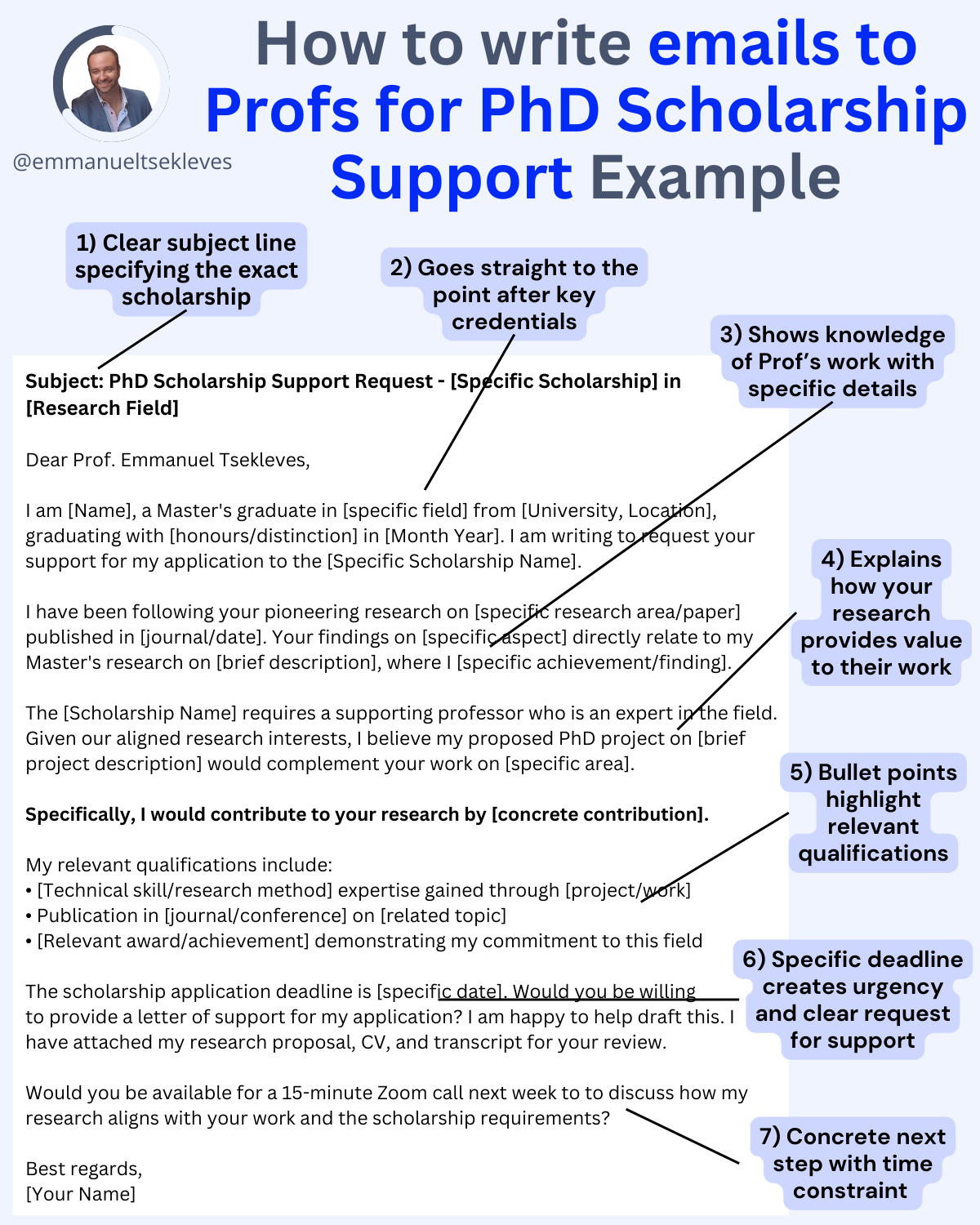
Subject Line: "Quick question about your recent [specific paper/project]"
Email Structure: "Hi Dr. [Name],
I just read your paper on [specific topic] and was particularly interested in [specific finding or methodology]. I'm a [your position] at [institution] working on [brief description of your work].
I noticed that you mentioned [specific challenge or future direction from their work]. I recently [specific thing you did that relates], which might be relevant to this question.
Would you be interested in a brief email exchange about [specific topic]? I'd be happy to share my findings if they'd be useful.
Best regards,
[Your name]"
Why it works: You demonstrate you've actually read their work, offer something valuable, and make responding easy with a low-commitment request.
Template #2: The Collaboration Proposal Email
Instead of vague "let's work together" messages, successful collaboration emails propose specific, concrete projects.
Subject Line: "Potential collaboration: [specific project idea]"
Email Structure: "Hi Dr. [Name],
I'm [your position] at [institution] working on [brief research description]. Your expertise in [their specific area] would be perfect for a project I'm developing.
Specifically, I'm proposing [one paragraph describing a concrete project that would benefit both of you]. This would involve [specific contributions from each person] over approximately [realistic timeframe].
I've attached a one-page project outline for your review. Would you be interested in a 15-minute phone call to discuss this possibility?
Best regards,
[Your name]"
Why it works: You propose something specific rather than abstract, show you understand their expertise, and ask for a small time commitment.
Template #3: The Strategic Follow-Up Email
Most people send generic follow-ups that get ignored. Strategic follow-ups add new value or information.
Subject Line: "Follow-up: [original topic] + new development"
Email Structure: "Hi Dr. [Name],
I wanted to follow up on my email from [timeframe] about [original topic]. I understand you're incredibly busy, so no worries if this isn't a priority right now.
Since my last email, I've [new development, finding, or resource that adds value to your original proposal]. This might change the scope or timeline of what I originally proposed.
If you're still interested, I'd be happy to send an updated proposal. If not, I completely understand and wish you the best with your current projects.
Best regards,
[Your name]"
Why it works: You add new information rather than just repeating your original request, and you give them an easy way to decline gracefully.
Template #4: The Conference Connection Email
Conferences create natural opportunities for outreach, but most people waste them with generic networking messages.
Subject Line: "Following up from [conference name]: [specific topic]"
Email Structure: "Hi Dr. [Name],
I enjoyed your presentation on [specific topic] at [conference]. Your point about [specific detail] really resonated with my current work on [brief description].
I'm particularly interested in [specific aspect they mentioned]. I've been working on [related project] and found [brief finding or insight]. This might connect to the future directions you mentioned.
Would you be interested in continuing this conversation via email? I'd be happy to share more details about my findings if they'd be useful.
Best regards,
[Your name]"
Why it works: You reference a specific shared experience and demonstrate you were actively listening to their presentation.
Template #5: The Expert Interview Request Email
When you need information or advice, positioning it as seeking their expertise rather than asking for help gets better responses.
Subject Line: "Interview request: your expertise on [specific topic]"
Email Structure: "Hi Dr. [Name],
I'm [your position] conducting research on [specific topic] and would greatly value your expertise. Your work on [specific area] makes you one of the leading authorities on this subject.
I'm hoping to conduct brief interviews with experts like yourself to understand [specific research question]. This would involve 20-30 minutes of your time via phone or video call at your convenience.
Your insights would be incredibly valuable for [specific purpose: publication, dissertation, etc.]. Would you be willing to participate in this expert interview?
Best regards,
[Your name]"
Why it works: You position them as the expert and make it clear that their time will contribute to something meaningful.
Key Takeaways:
- Focus on what you can offer them rather than what you want from them in your outreach
- Be specific about projects, timelines, and commitments rather than making vague proposals
- Reference their actual work to show you've done your homework and aren't sending mass emails
→ Your Action Plan for This Week
- Choose one of these templates and customize it for someone you want to connect with
- Practice writing specific subject lines that reference actual details from their recent work
Which type of academic email do you struggle with most? Reply and share your biggest email challenge!
Well, that’s it for today.
See you next week.
Whenever you're ready, there are 3 ways I can help you:
1. Get free actionable tips on how to complet your PhD and secure a tenure-track job in academia by following me on X, LinkedIn me Instagram and BlueSky
2. Take my proven Academic Job Accelerator Program that has helped hundreds of researchers secure academic positions, and start with my free training videos to learn the exact strategies hiring committees respond to.
3. Join my Premium 1:1 PhD Mentorship Program. I provide exclusive, results-driven support for professionals who need fast-track guidance on proposals and thesis completion. DM or email me to learn more about this premium consultancy for serious professionals ready to succeed quickly.
Responses