

Today, I'm sharing the exact 25-5 writing technique that helped me complete my dissertation chapter by chapter without ever experiencing writer's block.
10 September 2025
Read time: 3 minutes
Supporting our sponsors directly helps me continue delivering valuable content for FREE to you each week. Your clicks make a difference! Thank you. Emmanuel
Get support in securing your next MBA, DBA or PhD Program
AdmitEase helps working professionals and researchers find flexible, accredited online programs, from MBAs and DBAs to PhDs and certificates.
Partnering with over 55 universities worldwide, we offer personalized program matching, exclusive scholarships, and one-click applications.
Whether you’re advancing your career, pursuing doctoral research, upskilling in your field, or making a career change, AdmitEase makes higher education more accessible.
Writing a dissertation feels impossible when you think about creating 200+ pages of academic text.
Most PhD students get paralyzed by the enormity of the task, spending more time worrying about writing than actually writing.
What if there was a simple daily method that made dissertation writing feel manageable and even enjoyable?
Today, I'm sharing the exact 25-5 writing technique that helped me complete my dissertation chapter by chapter without ever experiencing writer's block.
This method has transformed the writing experience for dozens of my PhD students and mentees who went from dreading their dissertations to making steady, confident progress.

During my second year of PhD study, I spent six months avoiding my dissertation because the task felt overwhelming.
Every time I sat down to write, I'd stare at the blank page, panic about everything I needed to accomplish, and end up procrastinating instead of working.
The breakthrough came when I discovered the 25-5 method from a productivity expert.
This simple technique completely changed my relationship with writing.
Instead of dreading dissertation work, I started looking forward to my daily writing sessions and completed my entire dissertation nine months ahead of schedule.
The 25-5 Method Explained
The method is beautifully simple:
- write for 25 minutes, then take a 5-minute break.
- Repeat this cycle throughout your designated writing time.
Why it works: Your brain can focus intensely for short periods much more easily than for long stretches.
The 25-minute writing sessions are long enough to make real progress but short enough to prevent mental fatigue.
The 5-minute breaks let your subconscious process ideas while your conscious mind rests.
This method eliminates the pressure of marathon writing sessions that lead to burnout and writer's block.
Setting Up Your 25-5 Writing Environment
Success with this method requires creating the right physical and mental environment for focused writing.
How to do it:
- Choose a specific location that you'll use only for dissertation writing.
- Remove all distractions including phone, social media, and unrelated browser tabs.
- Set a timer for exactly 25 minutes and commit to writing continuously until it rings.
During writing time, don't stop to edit, research additional sources, or perfect sentences. Just keep your fingers moving and ideas flowing onto the page.
What to Write During Each 25-Minute Session
Most people struggle with this method because they don't know what to write about during each short session.
How to do it: Before starting your writing session, write down one specific goal for the next 25 minutes.
This might be "explain the theoretical framework," "summarize three key studies," or "describe the research methodology."
Having a clear, small target keeps you focused and prevents wandering.
If you finish your goal early, use the remaining time to brainstorm ideas for your next session or expand on what you just wrote.
Making the Most of Your 5-Minute Breaks
The break time is crucial for maintaining energy and generating new ideas throughout your writing session.
How to do it:
- Use breaks for physical movement like stretching, walking around your room, or doing jumping jacks.
- Avoid checking email, social media, or anything that will distract you from your writing flow.
- Keep a small notebook nearby to jot down ideas that come during breaks so you don't lose them.
Sometimes the best ideas come during these mental breaks.
Tracking Progress and Building Momentum
The 25-5 method works best when you can see your daily progress accumulating over time.
How to do it: Keep a simple log of how many 25-minute sessions you complete each day and what you accomplish in each one.
Watching your session count grow creates momentum and motivation to continue.
Set a realistic daily goal like four to six sessions (2-3 hours of total writing time) rather than trying to write all day long.
Handling Common 25-5 Method Challenges
Most people encounter predictable obstacles when starting this method that can be easily overcome.
How to do it:
- If you can't think of what to write, spend the session doing a brain dump of everything you know about your topic.
- If you feel like stopping before 25 minutes, remind yourself that you only need to persist for a few more minutes.
- If you finish early, use remaining time to outline your next session.
The key is never to break the 25-minute commitment, even if the writing feels difficult or unproductive.
Adapting the Method for Different Dissertation Stages
The 25-5 method works for all phases of dissertation writing but requires slight adjustments for different activities.
How to do it:
- For outlining and planning, use sessions to organize ideas and create structure.
- For first drafts, focus on getting ideas down without worrying about quality.
- For revision, use sessions to work through specific sections systematically.
Remember that different types of writing require different mental energy, so adjust your daily session goals accordingly.
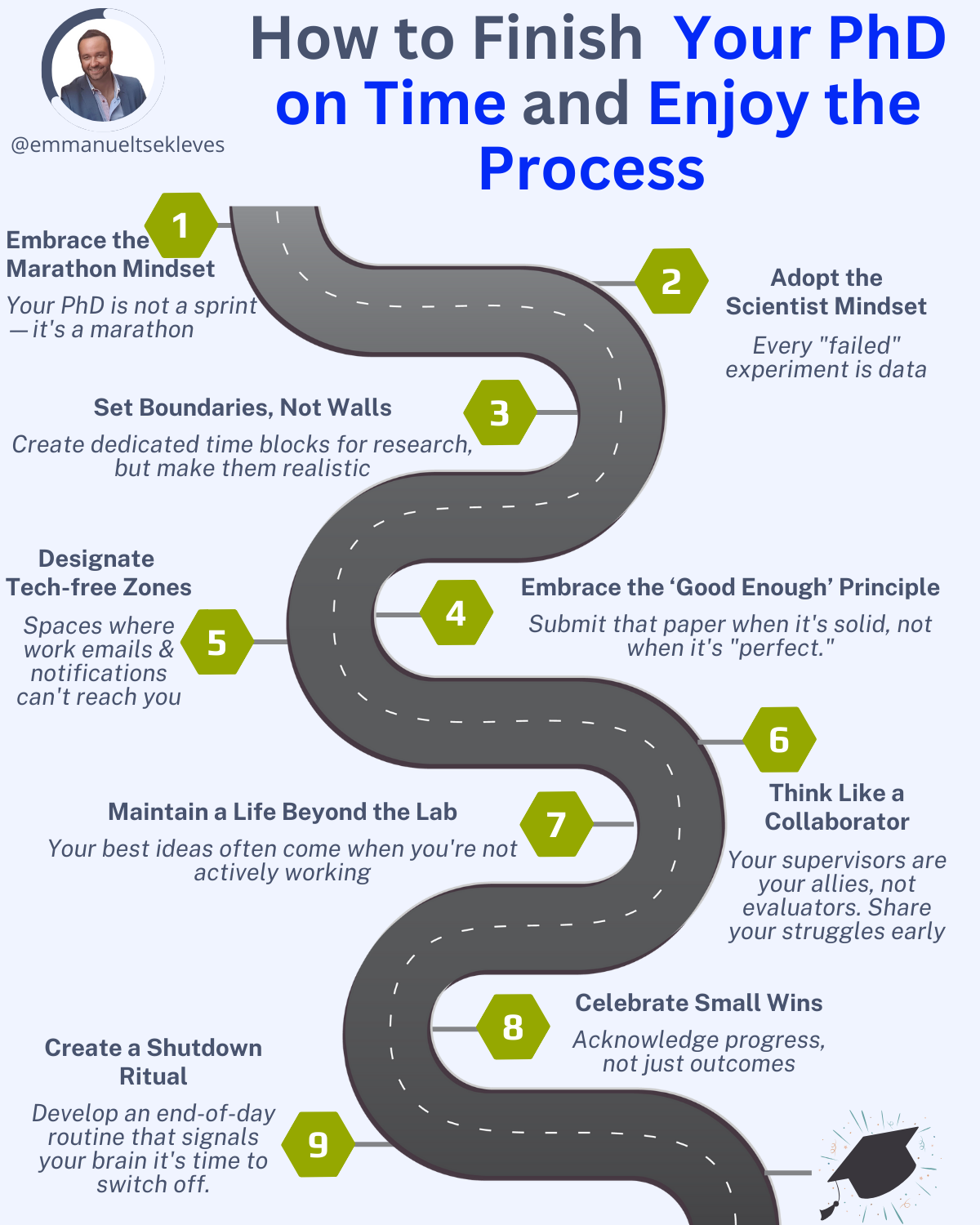
Key Takeaways:
- Write in focused 25-minute bursts with 5-minute breaks to prevent mental fatigue and maintain consistent progress
- Set specific goals for each session to stay focused and make measurable progress
- Track your sessions daily to build momentum and see progress accumulating over time
→ Your Action Plan for This Week
- Set up a dedicated dissertation writing space free from distractions
- Try the 25-5 method for one hour (two complete cycles) focusing on a specific section
- Create a simple tracking system to log your daily writing sessions and progress
Struggling with your PhD?
Join my Premium 1:1 PhD Mentorship Program.
I provide exclusive, results-driven support for professionals who need fast-track guidance on proposals and thesis completion.
DM or email me to learn more about this premium consultancy for serious professionals ready to succeed quickly.
What's your biggest challenge with dissertation writing consistency? Reply and share your specific struggles!
Well, that’s it for today.
See you next week.
Whenever you're ready, there are 3 ways I can help you:
1. Get free actionable tips on how to complet your PhD and secure a tenure-track job in academia by following me on X, LinkedIn me Instagram and BlueSky
2. Take my proven Academic Job Accelerator Program that has helped hundreds of researchers secure academic positions, and start with my free training videos to learn the exact strategies hiring committees respond to.
3. Join my Premium 1:1 PhD Mentorship Program. I provide exclusive, results-driven support for professionals who need fast-track guidance on proposals and thesis completion. DM or email me to learn more about this premium consultancy for serious professionals ready to succeed quickly.
Responses