

Today, I'm sharing the exact preparation strategy that helped one of my postdocs navigate a challenging peer review process with complete AI transparency, satisfy skeptical reviewers, and ...
27 August 2025
Read time: 3 minutes
Supporting our sponsors directly helps me continue delivering valuable content for FREE to you each week. Your clicks make a difference! Thank you. Emmanuel
Identify Research Gaps in Hours Instead of Months with Bohrium SciMaster
Stop endless manual searching. Bohrium SciMaster's Deep Research analyzes hundreds of sources to map existing knowledge and identify research gaps in your field within hours. Multi-round conversations let you refine questions and explore different aspects without restarting.
Transform scattered findings into organized insights that highlight promising research directions. Use AI to accelerate initial exploration while you focus on critical analysis and original thinking.
Try Bohrium SciMaster free using code EMMANUEL at scimaster.bohrium.com
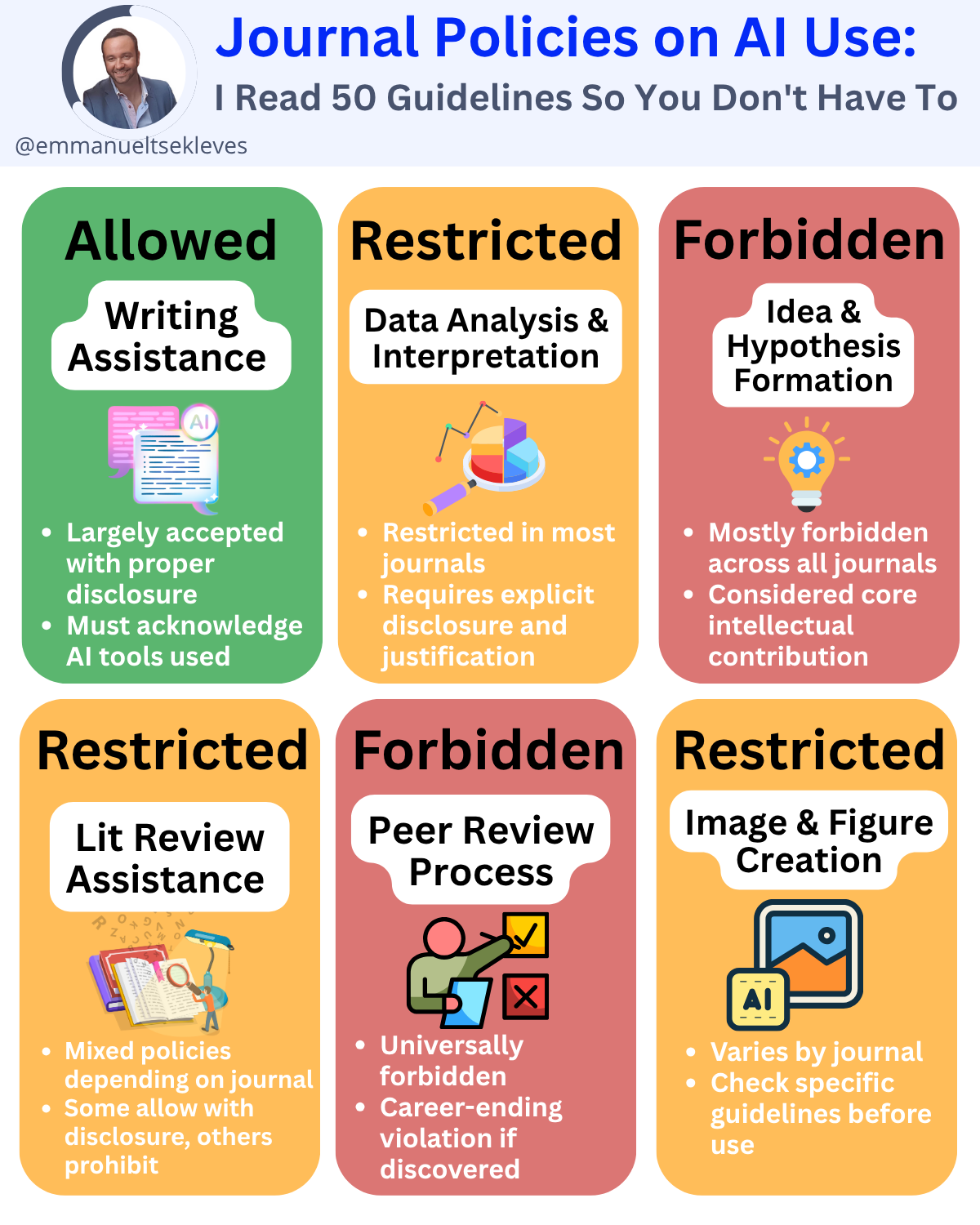
Peer reviewers are increasingly suspicious about AI use in academic research, and many papers are getting rejected not for poor science but for unclear AI policies or undisclosed AI assistance.
Even researchers who use AI ethically are facing tough questions they're unprepared to answer.
What if you could anticipate every AI-related concern reviewers might have and address them proactively?
Today, I'm sharing the exact preparation strategy that helped one of my postdocs navigate a challenging peer review process with complete AI transparency, satisfy skeptical reviewers, and maintain research credibility in the age of artificial intelligence.

Six months ago, one of my postdocs received harsh reviewer comments questioning whether AI had compromised the integrity of their research, even though they'd used AI tools appropriately and ethically.
The reviewers weren't convinced by the brief disclosure statement and demanded extensive clarification that delayed publication by three months.
This experience taught us both that simply following journal AI policies isn't enough.
You need to anticipate reviewer concerns and address them comprehensively before submission.
Since implementing this proactive approach with my postdoc team, our papers sail through peer review with zero AI-related complications.
Strategy #1: Create a Comprehensive AI Use Documentation
Most researchers provide minimal AI disclosures that raise more questions than they answer.
Comprehensive documentation prevents reviewer suspicion.
How to do it: For every paper, create a detailed AI use log that includes:
- which specific tools you used,
- what tasks they helped with,
- how you verified their output,
- and what percentage of your work involved AI assistance.
Include version numbers, dates of use, and specific prompts when relevant.
Make this documentation so thorough that reviewers can clearly understand exactly how AI contributed to your research process.
Strategy #2: Anticipate the Five Standard Reviewer AI Questions
Based on recent peer review trends, reviewers consistently ask the same five questions about AI use in research.
How to do it: Before submission, prepare detailed responses to these questions:
- "How did you verify AI-generated content?"
- "What safeguards prevented AI bias?"
- "How do you ensure research originality?"
- "What would happen if AI tools became unavailable?" and
- "How did AI use comply with research ethics?"
Address these questions proactively in your methods section or supplementary materials rather than waiting for reviewers to ask.
Strategy #3: Provide Clear Before-and-After Examples
Reviewers want to understand exactly how AI changed your research process and outputs.
Vague descriptions create suspicion.
How to do it: Include specific examples showing your work before and after AI assistance.
For instance, if AI helped with literature analysis, show a sample of your manual analysis process alongside the AI-enhanced version.
This transparency demonstrates that AI enhanced rather than replaced your expertise.
Focus on showing how AI amplified your existing skills rather than doing the work for you.
Strategy #4: Address Potential Bias and Reliability Concerns
Reviewers are especially concerned about AI tools introducing bias or producing unreliable results that compromise research validity.
How to do it: Document your bias checking procedures, including how you tested AI outputs against known reliable sources.
Explain your verification methods for AI-generated content and describe backup procedures you used when AI outputs seemed questionable.
Show reviewers that you treated AI output as provisional rather than authoritative throughout your research process.
Strategy #5: Demonstrate Research Independence
The biggest reviewer fear is that AI did the intellectual heavy lifting while researchers just supervised.
You need to clearly show your independent contribution.
How to do it: Highlight all the tasks you completed without AI assistance, emphasizing where your expertise was essential.
Describe decision points where you overruled or significantly modified AI suggestions.
Show that your research conclusions came from your analysis, not AI recommendations.
Make it obvious that removing AI tools wouldn't fundamentally change your research findings or conclusions.
The Proactive Disclosure Strategy
Instead of minimizing AI use, embrace full transparency as a strength that demonstrates your ethical approach to emerging technology.
How to do it:
- Write AI disclosures that position your careful AI integration as evidence of methodological sophistication rather than shortcuts.
- Frame your AI use as enhancing research rigor through additional verification and analysis capabilities.
This approach transforms potential reviewer concerns into recognition of your thoughtful approach to research innovation.
Creating Reviewer-Ready Supplementary Materials
Many journals now request detailed AI use documentation as supplementary materials.
Prepare these materials whether required or not.
How to do it: Create a standalone AI use supplement that includes:
- your documentation log,
- bias checking procedures,
- verification methods,
- and independence demonstrations.
Make this document so comprehensive that reviewers have no remaining questions about your AI integration.
Offer to provide additional AI documentation if reviewers request it, showing your commitment to complete transparency.
Key Takeaways:
- Document AI use comprehensively from the beginning rather than creating minimal disclosures at submission time
- Anticipate standard reviewer questions and address them proactively in your paper or supplementary materials
- Demonstrate research independence by clearly showing where your expertise was essential and irreplaceable
→ Your Action Plan for This Week
- Create an AI use documentation template for tracking tools, tasks, and verification methods in your research
- Draft responses to the five standard reviewer AI questions for your current research projects
- Prepare before-and-after examples showing how AI enhanced rather than replaced your analytical work
What AI-related reviewer concerns worry you most about your research? Reply and share your specific questions!
Well, that’s it for today.
See you next week.
Whenever you're ready, there are 3 ways I can help you:
1. Get free actionable tips on how to secure a tenure-track job in academia by following me on X, LinkedIn me Instagram and BlueSky
2. Take my proven Academic Job Accelerator Program that has helped hundreds of researchers secure academic positions, and start with my free training videos to learn the exact strategies hiring committees respond to.
3. If you're ready to take your PhD application journey to the next level, join my PhD Application and Scholarship Masterclass. Click the link below to learn more and secure your spot.

Responses