
Today, I'm sharing the exact five-step formula that helped my mentees turn their generic template into tailored letters that generated interview requests at 60% of the institutions where they applied.
6 August 2025
Read time: 3 minutes
Supporting our sponsors directly helps me continue delivering valuable content for FREE to you each week. Your clicks make a difference! Thank you. Emmanuel
Transform Your Research Workflow with Anara's AI-Powered Library
Stop losing track of research papers forever.
Anara lets you upload unlimited papers, organize them by topic, and actually chat with your entire research collection to get instant answers to questions like "What paper discussed X topic?"
Build your complete AI-powered research library in under 5 minutes and turn scattered papers into a searchable knowledge base that talks back.
Try it free at anara.com or use my code EMMANUEL20 for 20% off.
Create Conference Posters & Research Dashboards in Minutes with SciSpace Agent AI
Stop spending days designing conference posters. SciSpace Agent AI analyzes your paper and automatically creates a professional academic poster with images in just 7 minutes, plus generates impressive visual research dashboards by searching hundreds of papers and online reports.
Transform your research into compelling visuals that you can download, edit, and share with advisors instantly.
Try SciSpace Agent AI today and revolutionize your research presentation workflow. Get 40% discount with my code: EMMANSA40
Your academic cover letter is probably boring search committees to death.
Most PhD students and postdocs write generic letters that sound exactly like everyone else's.
Then wonder why they never hear back from positions they're qualified for.
The truth?
Hiring committees can spot templated cover letters instantly, and they usually go straight to the rejection pile.
Today, I'm sharing the exact five-step formula that helped my mentees turn their generic template into tailored letters that generated interview requests at 60% of the institutions where they applied.

During the first year on the job market, one of my mentees used the same basic cover letter for every application;
just changing the university name and department.
Despite applying to 47 positions, he received only one interview requests and zero job offers.
The breakthrough came when we completely changed his approach, developing a systematic method for customizing each letter to show genuine interest and fit.
This new strategy immediately improved his response rate and ultimately led to multiple job offers.
Step #1: Research the Department's Specific Needs and Challenges
Most cover letters focus on what you want from the job.
Winning letters focus on what you can do for the department.
How to do it:
- Spend 30 minutes researching each department before writing.
- Look at their website for strategic plans, recent news, and faculty pages.
- Check if they mention specific challenges like enrollment growth, new programs, or research initiatives.
- Notice which courses are taught by adjuncts or visiting faculty.
- Create a simple document listing three specific department needs or challenges that your application will address.
Step #2: Find Your Natural Connection Points with Current Faculty
Generic letters mention faculty names randomly.
Strategic letters identify genuine research connections that could lead to collaborations.
How to do it:
- Review the research of 3-4 faculty members whose work genuinely connects to yours.
- Look for specific overlaps in methods, theories, or research questions rather than just general topic areas.
- Find faculty who might benefit from your particular expertise or approach.
- Write one specific sentence about how your work could complement or extend each faculty member's research.
Step #3: Connect Your Experience to Their Specific Course Needs
Most cover letters list teaching experience generically.
Effective letters show how your background solves their specific teaching challenges.
How to do it:
- Look at their course catalog and recent schedules to identify courses you could teach immediately.
- Pay special attention to required courses, large enrollment classes, or areas where they use many adjunct instructors.
- Match your teaching experience to their obvious needs.
- Mention 2-3 specific courses from their catalog that you're prepared to teach, and explain briefly why you're qualified for each.
Step #4: Reference Their Recent Achievements or Initiatives
This step shows you've done serious research and are genuinely interested in joining their community.
How to do it:
- Look for recent department news, new grants, program launches, or faculty achievements mentioned on their website.
- Find something positive and specific that happened in the last 1-2 years.
- Reference how your work or interests align with these developments.
- Include one sentence that shows you understand their current direction and how you'd contribute to their momentum.
Step #5: Craft a Compelling Future Vision Paragraph
Generic letters end with vague statements about fit.
Strong letters paint a specific picture of your successful integration into their department.
How to do it:
- Write a paragraph describing exactly how you envision contributing to their department in your first 2-3 years.
- Include specific mentions of courses you'd develop, potential collaborations you'd pursue, and how your research would enhance their program.
- Make this vision concrete and realistic, not grandiose or unrealistic.
The Integration Strategy: Weaving It All Together
The key is integrating these five elements naturally throughout your letter, not just adding them as separate paragraphs.
How to do it:
- Start with their needs, then show how your qualifications address those needs.
- Weave in faculty connections and course mentions naturally as you describe your relevant experience.
- End with your specific vision for contributing to their particular department.
This approach transforms your letter from a generic job application to a compelling argument for why you're the perfect fit for their specific situation.
Quality Control: The Final Check
Before sending any letter, verify that it could only have been written for that specific institution.
How to do it:
- Remove the university name throughout your letter.
- If the content could apply to any similar department, you need more specificity.
- A truly tailored letter should be obviously written for one particular institution even without the name.
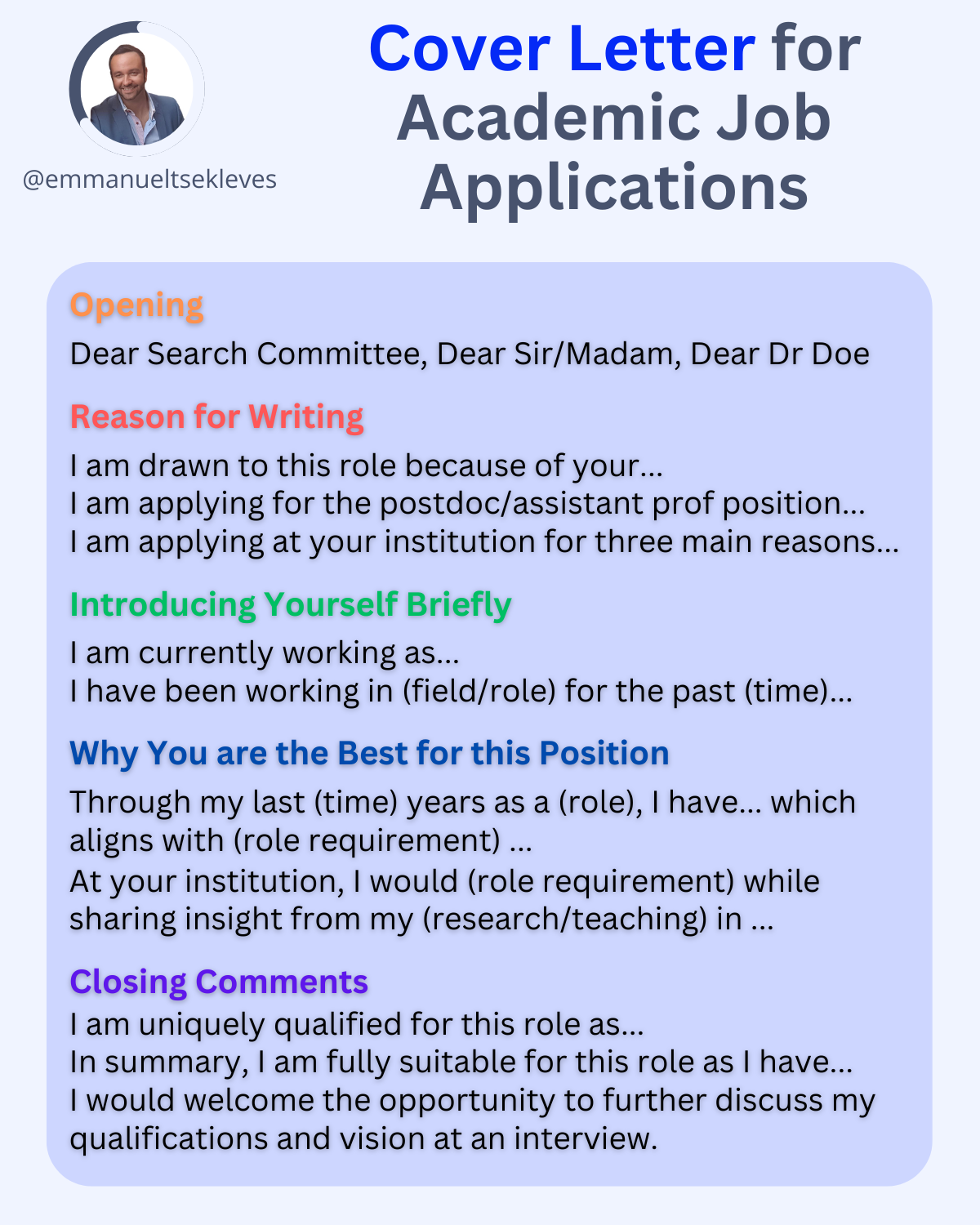
Key Takeaways:
- Research department needs first then show how you address their specific challenges rather than just listing your qualifications
- Find genuine research connections with current faculty instead of name-dropping randomly
- Paint a specific future vision of how you'll contribute to their particular department in concrete ways
-
→ Your Action Plan for This Week
- Choose one target department and spend 30 minutes researching their specific needs and recent initiatives
- Identify three current faculty members whose research genuinely connects to your work
- Draft one paragraph describing your specific vision for contributing to that department
Ready to master academic cover letters that get results?
Visit my Academic Job Accelerator Program that has helped hundreds of researchers secure academic positions, and start with my free training videos to learn the exact strategies hiring committees respond to.
What's the biggest challenge you face when customizing cover letters for different institutions?
Well, that’s it for today.
See you next week.
Whenever you're ready, there are 3 ways I can help you:
1. Get free actionable tips on how to secure a tenure-track job in academia by following me on X, LinkedIn me Instagram and BlueSky
2. Take my proven Academic Job Accelerator Program that has helped hundreds of researchers secure academic positions, and start with my free training videos to learn the exact strategies hiring committees respond to.
3. If you're ready to take your PhD application journey to the next level, join my PhD Application and Scholarship Masterclass. Click the link below to learn more and secure your spot.
Responses