
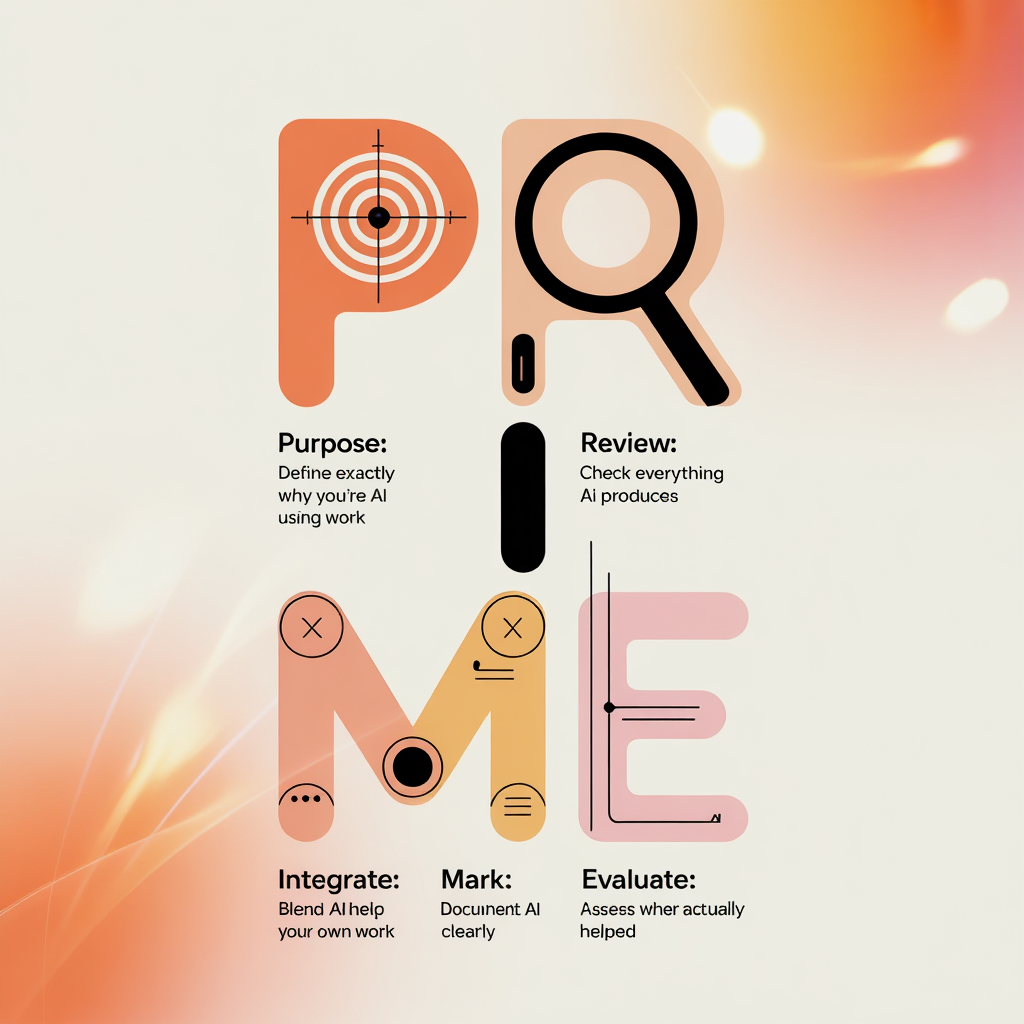
Today, I'm sharing the PRIME framework—5 clear steps that let you integrate AI into your research safely and effectively while maintaining full transparency and credibility.
25 June 2025
Read time: 3 minutes
Supporting our sponsors directly helps us continue delivering valuable content for FREE to you each week — your clicks make a difference!
My Academic Job Accelerator Program
Transform your academic job search with the 6P Success System - my proven framework that's helped hundreds of PhDs land positions at top institutions in just 6 weeks.
Master the hidden rules of academic hiring, develop a standout research identity, and create application materials that get you noticed in 75 seconds or less.
Limited spots available for our June cohort with registration closing on June 28th - completely FREE videos to try out and assessment to determine if you're a good fit.
AI tools like ChatGPT and other research assistants are everywhere.
But most academics are confused about when and how to use them without violating research ethics or journal policies.
Some researchers avoid AI completely out of fear, while others use it carelessly and risk their reputation.
What if there was a simple framework that helped you harness AI's power while staying completely ethical?
Today, I'm sharing the PRIME framework.
5 clear steps that let you integrate AI into your research safely and effectively while maintaining full transparency and credibility..

When AI tools exploded onto the scene, I watched colleagues make costly mistakes.
Some had papers rejected for undisclosed AI use, while others missed opportunities to speed up their research because they were too scared to try these tools.
After studying emerging best practices and consulting with journal editors, I developed the PRIME framework.
This system has helped me:
- cut my literature review time in half,
- improve my writing clarity,
- and catch errors I would have missed
all while maintaining complete ethical standards and transparency.
P - Purpose: Define Exactly Why You're Using AI
The first step is being crystal clear about what role AI will play in your research project.
How to do it: Before using any AI tool, write down exactly what you want it to help with.
Good purposes include: organizing research notes, checking grammar, finding relevant papers, or brainstorming research questions.
Bad purposes include: generating fake data, writing conclusions you haven't verified, or replacing your own critical thinking.
Create a simple list of "AI-appropriate tasks" and "AI-inappropriate tasks" for your field before you start any project.
R - Review: Check Everything AI Produces
Never trust AI output without careful human review. AI tools make mistakes, create fake citations, and sometimes produce biased or incorrect information.
How to do it: Treat AI output as a rough first draft that needs your expertise to verify and improve.
Check every fact, verify every citation, and make sure every AI-generated idea actually makes sense for your research.
If you can't verify something AI produced, don't use it.
Set up a simple checklist: "Have I fact-checked this? Do these citations exist? Does this conclusion match my data?"
I - Integrate: Blend AI Help with Your Own Work
The best research uses AI as a tool to enhance your thinking, not replace it.
Your original ideas and expertise should always be the foundation.
How to do it: Use AI for time-consuming tasks like organizing information, improving sentence structure, or finding relevant background sources.
But make sure your research questions, analysis, and conclusions come from your own brain and expertise.
A good rule: If someone asked you to explain any part of your research, you should be able to do it without referencing what AI told you.
M - Mark: Document Your AI Use Clearly
Transparency is crucial. Most journals now require disclosure of AI use, and being honest protects your reputation.
How to do it: Keep a simple log of when and how you used AI tools.
Write down which tools you used, what tasks they helped with, and how you verified their output.
Include this information in your methods section or acknowledgments as required by your target journal.
Create a standard template: "We used [AI tool] to [specific task]. All output was reviewed and verified by the authors."
E - Evaluate: Assess Whether AI Actually Helped
Not every AI application improves your research. Some tools might slow you down or reduce quality.
How to do it: After completing a project section, honestly assess whether AI use made your work better, faster, or more accurate.
If not, adjust your approach for the next section.
Ask yourself: "Did this save time? Did it improve quality? Would I use this approach again?"
Key Takeaways:
- Define clear purposes for AI use before starting and stick to appropriate tasks only
- Always verify AI output with your own expertise—never trust it blindly
- Document everything transparently to maintain credibility and meet journal requirements
-
→ Your Action Plan for This Week
- Create your "AI-appropriate" and "AI-inappropriate" task lists for your research area
- Set up a simple AI use documentation template for your projects
- Try using AI for one small, appropriate task while following the PRIME framework
Well, that’s it for today.
See you next week.
Whenever you're ready, there are 3 ways I can help you:
1. Get free actionable tips on how to secure a tenure-track job in academia by following me on X, LinkedIn me Instagram and BlueSky
2. Take my proven Academic Job Accelerator Program that has helped hundreds of researchers secure academic positions, or start with my free training videos to learn the exact strategies hiring committees respond to.
3. If you're ready to take your PhD application journey to the next level, join my PhD Application and Scholarship Masterclass waitlist. Click the link below to learn more and secure your spot.
Responses