
Today, I'm sharing the strategic journal selection framework that helped me get cited three times more often and land better job offers by publishing in the "right" journals, not just the "top-ranked" ones.
14 January 2026
Read time: 3 minutes
Supporting our sponsors directly helps me continue delivering valuable content for FREE to you each week. Your clicks make a difference! Thank you. Emmanuel
Find Research Gaps in 30 Minutes (Not 30 Hours)
47 open tabs. 12 half-read papers. Zero clarity. Sound familiar?
AllSci maps 20+ million papers into hypotheses and evidence. You don't just see what exists — you see what's missing.
→ Results organised by hypothesis, not just keywords
→ Shows supporting evidence for each claim
→ Visualises the entire research landscape
Free for researchers.
👉 Try it: https://allsci.com/
Many early-career researchers obsess over journal impact factors, thinking higher numbers always mean better career outcomes.
They waste years submitting to prestigious journals that repeatedly reject their work, or worse, they publish in high-impact outlets that nobody in their actual field reads.
What if the journals that help your career most aren't the ones with the highest impact factors?
Today, I'm sharing the strategic journal selection framework that helped me get cited three times more often and land better job offers by publishing in the "right" journals, not just the "top-ranked" ones.

During my early career research years, I had a strong paper that I kept submitting to the highest-impact journals in my broad field.
After two years and five rejections, I finally published it in a mid-tier general journal.
The paper got almost no citations because people in my specific area didn't read that journal.
Meanwhile, a colleague published similar quality work in a specialty journal with a much lower impact factor.
Her paper got cited 40+ times in two years because everyone in our subfield actually reads that journal.
Her strategic choice led to speaking invitations and job offers that my "higher impact" publication never generated.
Factor #1: Readership Matters More Than Rankings
A paper that gets read by 500 people in your field beats a paper that sits unread in a prestigious journal.
How to evaluate:
- Look at where the researchers you want to reach actually publish and cite papers from.
- Check which journals appear most often in bibliographies of recent papers in your area.
- Ask colleagues in your specialty which journals they read regularly versus which they only check occasionally.
The journal your target audience actually reads will advance your career more than the journal with the best impact factor that they ignore.
Factor #2: Review Speed Varies Dramatically by Journal
Some prestigious journals take 12-18 months from submission to publication. That delay can cost you jobs, grants, and momentum.
How to evaluate:
- Check journal websites for median time from submission to first decision and from acceptance to publication.
- Ask recent authors about their actual timeline experiences.
- Factor these timelines into your career stage and upcoming deadlines.
A publication that appears before your tenure review or job search matters more than a slightly more prestigious publication that appears too late.
Factor #3: Your Career Stage Should Drive Journal Strategy
The optimal journal choice changes dramatically as you progress from PhD student to tenured professor.
PhD students: Prioritise getting work published and building confidence. Aim for solid mid-tier journals where acceptance is likely.
One accepted paper beats three years of rejections from top journals.
Postdocs and early faculty: This is when prestige matters most for job searches and tenure.
Target a mix of top-tier journals for your best work and reliable mid-tier outlets for steady productivity.
Established faculty: You can afford to take more risks on prestigious journals or publish in specialized venues that advance specific conversations without worrying about impact factors.
Factor #4: Open Access Changes the Calculation
Paywalled articles in prestigious journals often get fewer citations than open access papers in mid-tier journals.
How to evaluate:
- Check if journals offer open access options and what they cost.
- Some lower-ranked journals provide free open access, dramatically increasing readership.
- Others charge $3,000+ for open access in addition to already being prestigious.
An open access paper in a good journal often reaches more readers than a paywalled paper in a great journal, leading to more citations and impact.
Factor #5: Review Quality Varies Independent of Journal Prestige
Some lower-ranked journals provide excellent peer review that improves your work.
Some prestigious journals provide superficial reviews that don't help.
How to evaluate:
- Ask colleagues about their review experiences at different journals.
- Read published papers to assess whether the journal's review process appears rigorous.
- Check if the journal has a reputation for constructive versus harsh reviews.
Good peer review that strengthens your paper has long-term value beyond the journal's ranking.
The Strategic Portfolio Approach
Instead of submitting everything to top journals, create a diversified publication strategy.
How to implement:
- Divide your papers into three categories.
- Submit your absolute best 20-30% to top-tier journals, accepting longer timelines and higher rejection rates.
- Send your solid 50-60% to reliable mid-tier journals where acceptance is likely.
- Use the remaining 20% for quick publications in newer or specialized journals.
This approach balances prestige, productivity, and realistic acceptance rates.
The Resubmission Decision Framework
When a top journal rejects your paper, you face a critical choice about where to send it next.
How to decide:
- If reviewers raised fundamental concerns, move down one tier and address the criticisms thoroughly.
- If reviewers were positive but the editor rejected for "not broad enough interest," try a more specialized journal where your work fits better.
- If you're facing a deadline, prioritize faster journals over incrementally more prestigious ones.
Don't automatically resubmit to the next-highest-ranked journal without strategic thinking.
Red Flags That Should Override Impact Factors
Some journal characteristics matter more than any ranking number.
Watch out for: Predatory journals that charge fees but provide no real peer review.
Journals with falling citation rates or reputations for bias.
Outlets where recent papers in your area get zero citations despite the journal's overall impact factor.
A journal's reputation in your specific subfield matters more than its overall impact factor.
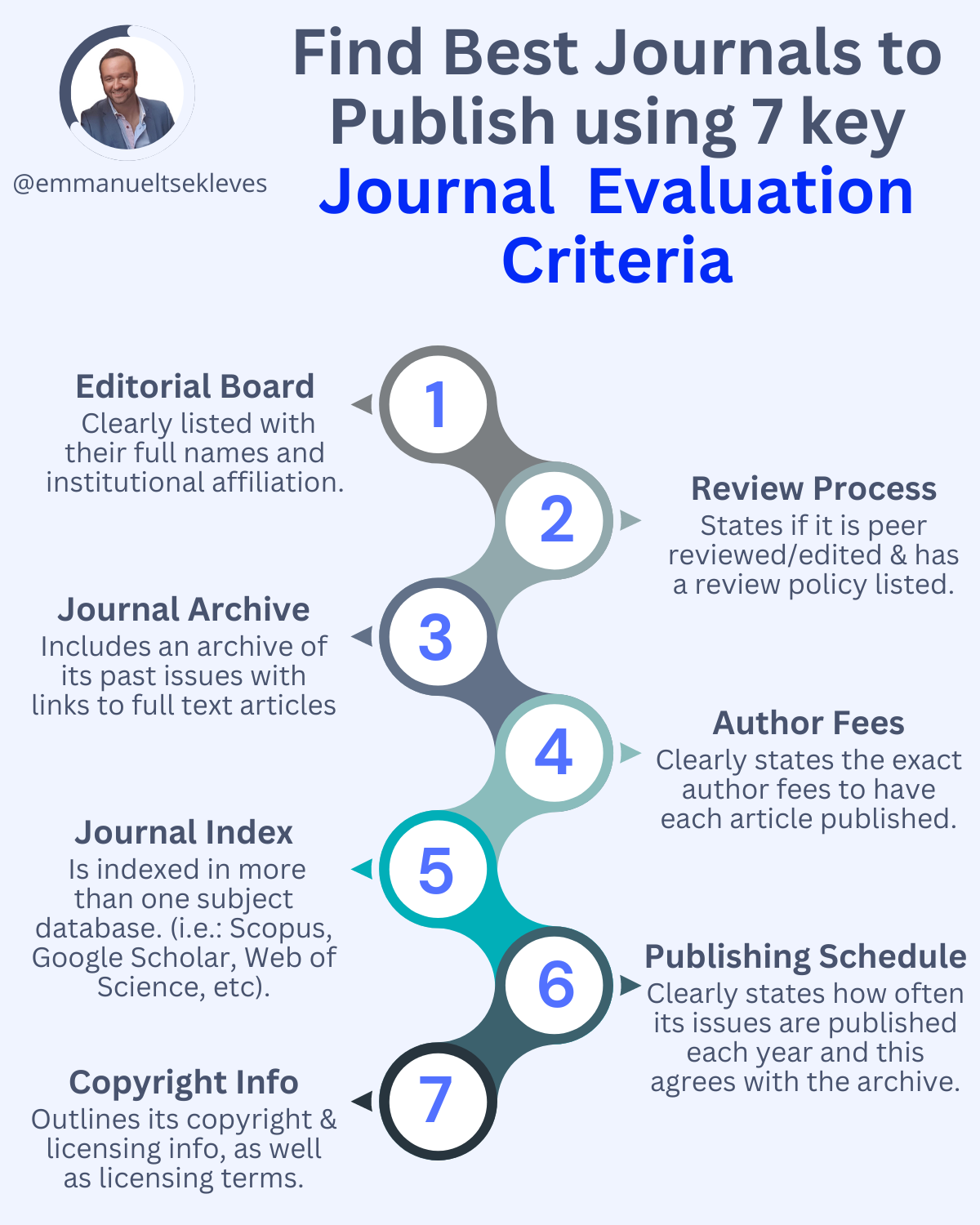
Key Takeaways:
- Publish where your target audience actually reads rather than chasing the highest impact factors
- Match journal selection to your career stage with different strategies for students versus faculty
- Balance prestige with acceptance probability and timeline to maintain steady productivity
→ Your Action Plan for This Week
- Identify the 3-5 journals that researchers in your area most frequently cite and read
- Create your strategic portfolio by categorizing current papers as top-tier, mid-tier, or quick publication targets
- Check average review timelines for your target journals against your upcoming career deadlines
What's your biggest confusion about choosing where to publish? Reply and share your specific question!
Well, that’s it for today.
See you next week.
Whenever you're ready, there are 3 ways I can help you:
1. Get free actionable tips on how to complete your PhD on time and use AI responsibky in research by following me on X, LinkedIn me Instagram and BlueSky
2. Join my Premium 1:1 PhD Mentorship Program. I provide exclusive, results-driven support for professionals who need fast-track guidance on proposals and thesis completion. Visit my website to learn more about this premium consultancy and book a discovery call.
Responses