
Today, I'm sharing the exact formula that transformed my acceptance rate significantly, a structure I've taught to hundreds of students who report similar improvements in their publication success.
24 December 2025
Read time: 3 minutes
Supporting our sponsors directly helps me continue delivering valuable content for FREE to you each week. Your clicks make a difference! Thank you. Emmanuel
Your Thesis Language Is Costing Your Thesis
Examiners spot weak academic language instantly.
Each thesis chapter needs different phrases. Introduction ≠ Discussion ≠ Results.
Paperpal suggests discipline-specific phrases, flags repetitive patterns, and polishes your scholarly voice in real-time.
👉 Try for free using my link.
Your paper's introduction determines whether reviewers keep reading or decide to reject within minutes.
Most academic introductions are boring, unfocused, and fail to communicate why the research matters.
What if there was a proven five-paragraph structure that works across disciplines to hook readers, establish importance, and set up your contribution?
Today, I'm sharing the exact formula that transformed my acceptance rate significantly, a structure I've taught to hundreds of students who report similar improvements in their publication success.

During my early career, my paper introductions rambled for pages without clearly stating what I was studying or why it mattered.
Reviewers often stopped reading before reaching my actual findings.
After analyzing introductions from highly-cited papers across multiple fields, I discovered they all followed a remarkably similar five-paragraph pattern.
Once I started using this formula, my acceptance rates soared.
More importantly, reviewers consistently commented that my introductions were "clear," "convincing," and "well-motivated."
The formula works because it mirrors how readers naturally want information presented.
Paragraph 1: The Hook (Why Anyone Should Care)
Your opening paragraph must grab attention by connecting your narrow topic to broader issues that matter beyond your specialty.
What to include:
- Start with a compelling statement about a real-world problem, surprising fact, or important question that non-specialists can understand.
- Use concrete examples or statistics that illustrate why this topic matters.
- Avoid jargon and technical details in these opening sentences.
Example approach: If studying teacher retention in rural schools, don't start with policy details.
Start with "Over 300 rural school districts in the U.S. struggle to keep qualified teachers for more than two years, leaving thousands of students without consistent, experienced instruction."
Paragraph 2: The Problem (What We Don't Know)
After establishing broad importance, narrow down to the specific knowledge gap or unsolved problem your research addresses.
What to include:
- Explain what researchers currently understand about your topic, then clearly identify what's still unknown, debated, or inadequately explained.
- Use phrases like "However, a critical gap remains" or "Despite this progress, we still don't understand" to highlight the problem.
Common mistake to avoid: Don't just list what others have studied.
Focus on what's genuinely missing or unresolved that creates problems for the field.
Paragraph 3: The Stakes (Why This Gap Matters)
Many introductions skip this crucial step, failing to explain why solving this specific problem is important.
What to include: Connect the knowledge gap back to consequences that matter.
- What can't we do, predict, or solve because this gap exists?
- What misunderstandings or limitations does it create?
- How does filling this gap advance theory, practice, or policy?
Power move: Include a sentence explaining who benefits when this gap is filled (practitioners, policymakers, future researchers, affected populations).
Paragraph 4: The Approach (What You Did)
Now that readers understand the problem and why it matters, explain your specific approach to addressing it.
What to include:
- State your research question or hypothesis clearly.
- Briefly describe your methodological approach in accessible language.
- Explain why your approach is well-suited to address this particular gap.
Balance to strike: Provide enough detail that readers understand your strategy without overwhelming them with technical specifics that belong in your methods section.
Paragraph 5: The Preview (What You Found and What It Means)
End your introduction by previewing your main findings and their significance, giving readers a roadmap for the rest of the paper.
What to include:
- Summarise your key findings in 1-2 sentences without excessive detail.
- State the main implications or contributions of these findings.
- Briefly preview the paper's structure if appropriate for your field.
Why this works: Readers who know where you're going and why it matters are more motivated to work through your detailed methods and results sections.
The Transition Strategy Between Paragraphs
Smooth transitions between these five paragraphs make your introduction feel coherent rather than choppy.
How to connect: End each paragraph with a sentence that naturally leads into the next paragraph's focus.
Use transitional phrases like:
- "This gap is particularly important because..." (moving from paragraph 2 to 3)
- or "To address this problem, we..." (moving from paragraph 3 to 4).
Good transitions make the logical flow feel inevitable rather than forced.
Adapting the Formula to Your Field
While the five-paragraph structure works across disciplines, the emphasis and length vary by field.
Field-specific adjustments:
- Theoretical fields might spend more space on paragraph 2 establishing the conceptual gap.
- Applied fields might emphasize paragraph 3 on practical stakes.
- Methodological papers might expand paragraph 4 on approach.
The key is maintaining all five elements while adjusting their relative emphasis to match your field's conventions.
The One-Sentence Test
After writing your introduction, verify it's working with this simple test.
How to test: Can you clearly answer these questions from your introduction alone:
- What's the broad issue?
- What specific gap exists?
- Why does that gap matter?
- How did you address it?
- What did you find and why does it matter?
If readers can't answer all five questions, revise until they can.
Common Mistakes to Avoid
Even following this formula, certain errors undermine introduction's effectiveness.
Mistakes to eliminate:
- Starting with dictionary definitions or overly broad statements like "Since the beginning of time..."
- Writing an extensive literature review instead of focusing on the gap.
- Burying your research question on page 3.
- Failing to preview findings, leaving readers uncertain about where the paper is going.
Key Takeaways:
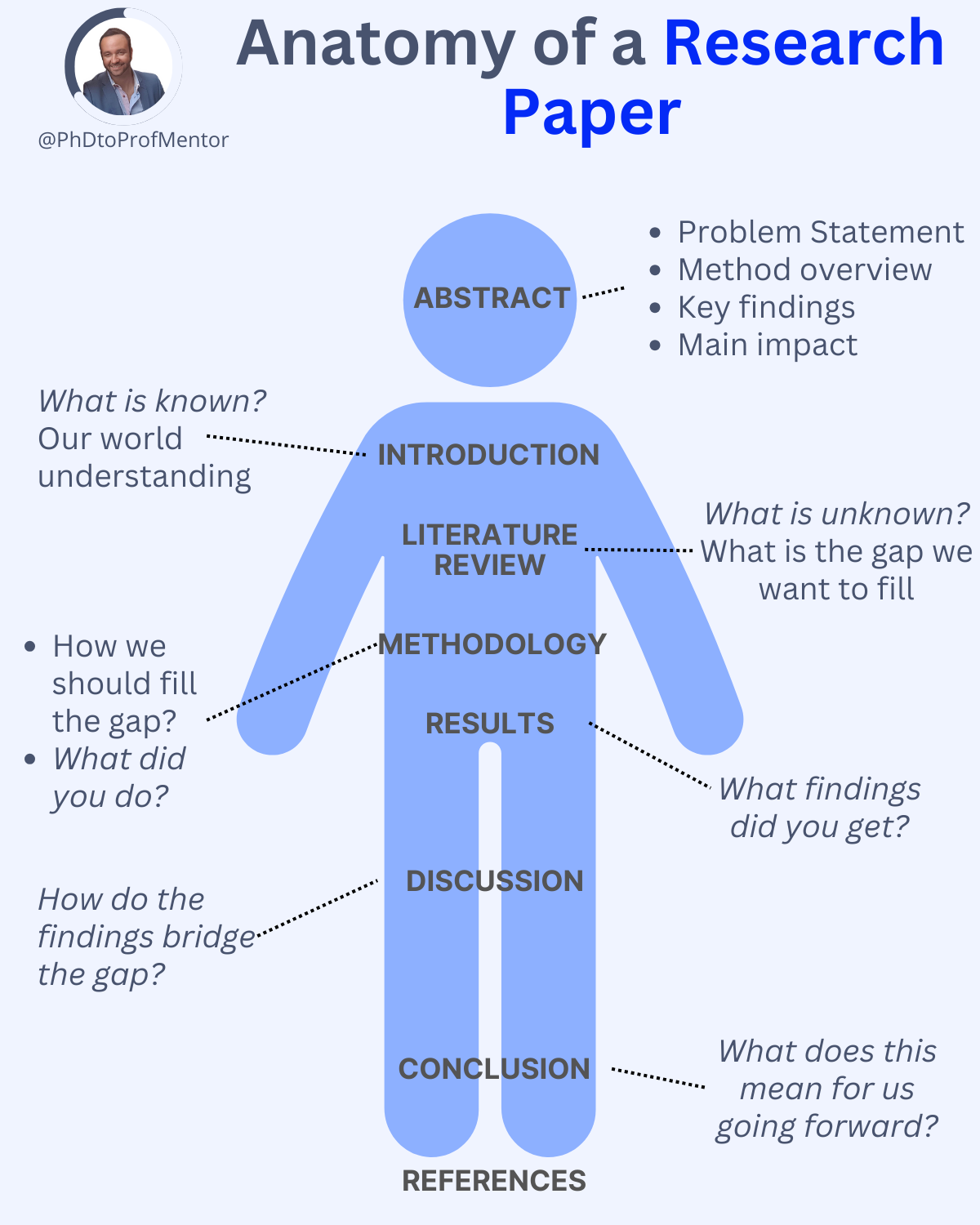
- Follow the five-paragraph structure moving from broad importance to specific gap to your contribution
- Start with a hook that non-specialists understand before narrowing to technical details
- Always explain why your specific gap matters rather than assuming readers understand the stakes
→ Your Action Plan for This Week
- Outline your next paper introduction using the five-paragraph structure before writing
- Revise a current introduction to ensure it includes all five elements in order
- Test your introduction with the one-sentence test to verify clarity
Which part of writing introductions is most challenging for you? Reply and share your biggest struggle!
PhD while working full-time? Your supervisor doesn't understand your reality.
I've mentored 30+ working professionals to successful completion. I know exactly where you're losing time. Premium 1:1 mentorship for dedicated professionals with limited research hours.
Reply to this email for details.
Well, that’s it for today.
See you next week.
Whenever you're ready, there are 3 ways I can help you:
1. Get free actionable tips on how to complet your PhD and secure a tenure-track job in academia by following me on X, LinkedIn me Instagram and BlueSky
2. Join my Premium 1:1 PhD Mentorship Program. I provide exclusive, results-driven support for professionals who need fast-track guidance on proposals and thesis completion. DM or email me to learn more about this premium consultancy for serious professionals ready to succeed quickly.
Responses