
Today, I'm sharing the six proven techniques that transformed my own advisor relationship and have helped dozens of my students get better guidance, faster feedback, and stronger support throughout their PhD journey.
1 October 2025
Read time: 3 minutes
Supporting our sponsors directly helps me continue delivering valuable content for FREE to you each week. Your clicks make a difference! Thank you. Emmanuel
Identify Research Gaps in Minutes Instead of Months with AnswerThis
Stop endless manual searching. AnswerThis AI analyzes millions of papers to identify genuine research gaps in your domain and validate gap authenticity within minutes.
Smart filters and targeted follow-up questions let you refine gap analysis, explore citation patterns, and validate opportunities without starting over.
Transform scattered literature into organized insights that highlight authentic research opportunities. Use the Research Gap Finder to accelerate gap identification while you focus on developing novel approaches and original contributions.
Try AnswerThis with 1 month FREE credits today and turn research uncertainty into research opportunity: https://answerthis.io/?fpr=emmanuel65
Get 10% off using the code: LINKEDIN10
The relationship with your PhD advisor can make or break your graduate school experience...
...but most students never learn how to communicate effectively with their supervisor.
You need guidance, feedback, and support, but asking for help the wrong way can make you seem needy or incapable.
What if there were specific communication strategies that got you the mentoring you need while building your advisor's confidence in your abilities?
Today, I'm sharing the six proven techniques that transformed my own advisor relationship and have helped dozens of my students get better guidance, faster feedback, and stronger support throughout their PhD journey.

During my second year of PhD study, my relationship with my advisor was falling apart.
I felt like I wasn't getting enough guidance, but every time I asked for help, my advisor seemed frustrated or dismissive.
I started avoiding meetings and working in isolation, which only made things worse.
The turning point came when I learned to completely change how I communicated with my advisor.
Instead of asking vague questions or complaining about problems, I started using specific strategies that made our interactions more productive for both of us.
These techniques not only improved our working relationship but also accelerated my research progress significantly. Now sitting on the other side of the fence as a PhD advisor, I can see why these work.
Strategy #1: Come to Meetings with Specific Questions and Proposed Solutions
Most students bring vague problems to advisor meetings without offering potential solutions.
This approach makes advisors feel like they need to do your thinking for you.
How to do it: Before each meeting, prepare 2-3 specific questions paired with your own proposed solutions.
For example, instead of saying "I'm stuck on my analysis,"
say:
"I'm considering these two statistical approaches for my data. I think Method A might work better because of X, but I want your opinion on whether Method B might address the Y concern."
This approach shows you're thinking critically and just need guidance, not someone to solve problems for you.
Strategy #2: Send Meeting Agendas 24 Hours in Advance
Advisors appreciate knowing what you want to discuss before meetings start.
This preparation makes meetings more focused and productive.
How to do it:
- Send a brief email the day before each scheduled meeting with a simple agenda listing the 3-4 topics you want to cover.
- Include any materials your advisor should review beforehand, like draft sections or data summaries.
This practice shows respect for your advisor's time and helps ensure meetings address your most important needs.
Strategy #3: Provide Regular Progress Updates Between Meetings
Many advisor relationships suffer because advisors don't know what students are working on between meetings.
Regular updates keep them informed without requiring extra meetings.
How to do it:
- Send a brief weekly email summarizing what you accomplished, what you're working on next week, and any obstacles you're facing.
- Keep these updates to 3-4 sentences and focus on concrete progress rather than detailed explanations.
These updates help your advisor understand your work pace and offer timely guidance when needed.
Strategy #4: Ask for Feedback on Specific Aspects, Not General Comments
When you ask for general feedback, advisors often don't know where to focus their attention.
Specific feedback requests get you more useful responses.
How to do it: Instead of asking "What do you think of this draft?"
ask: "I'm particularly concerned about whether my argument in the third paragraph is clear. Could you focus on that section?"
or "I struggled with the transition between these two ideas. Does the flow work for you?"
This targeted approach makes it easier for advisors to give you the specific help you need.
Strategy #5: Take Initiative on Administrative and Logistical Tasks
Advisors appreciate students who handle routine tasks independently rather than constantly asking for guidance on procedural matters.
How to do it: Research program requirements, conference deadlines, and funding opportunities yourself before asking your advisor about them.
When you do need guidance on these topics, come prepared with specific information about options and deadlines.
Handle as many administrative tasks as possible independently, only involving your advisor when you need their signature or approval.
Strategy #6: Acknowledge Your Advisor's Feedback and Report Back on Implementation
Many students receive feedback but never follow up to show how they used it.
This lack of closure can be frustrating for advisors.
How to do it: After implementing your advisor's suggestions, send a brief update explaining what changes you made and how they improved your work.
This follow-up shows you value their input and helps them understand what advice is most helpful for you.
When you disagree with feedback or can't implement suggestions, explain your reasoning respectfully and ask for alternative approaches.
Building Long-Term Success
These communication strategies work best when used consistently over time rather than just during crisis periods.
How to maintain momentum:
- Start implementing one strategy at a time rather than trying to change everything at once.
- Focus on consistency in your chosen approach for several weeks before adding new techniques.
Remember that building a strong advisor relationship takes time and patience from both people involved.
Key Takeaways:
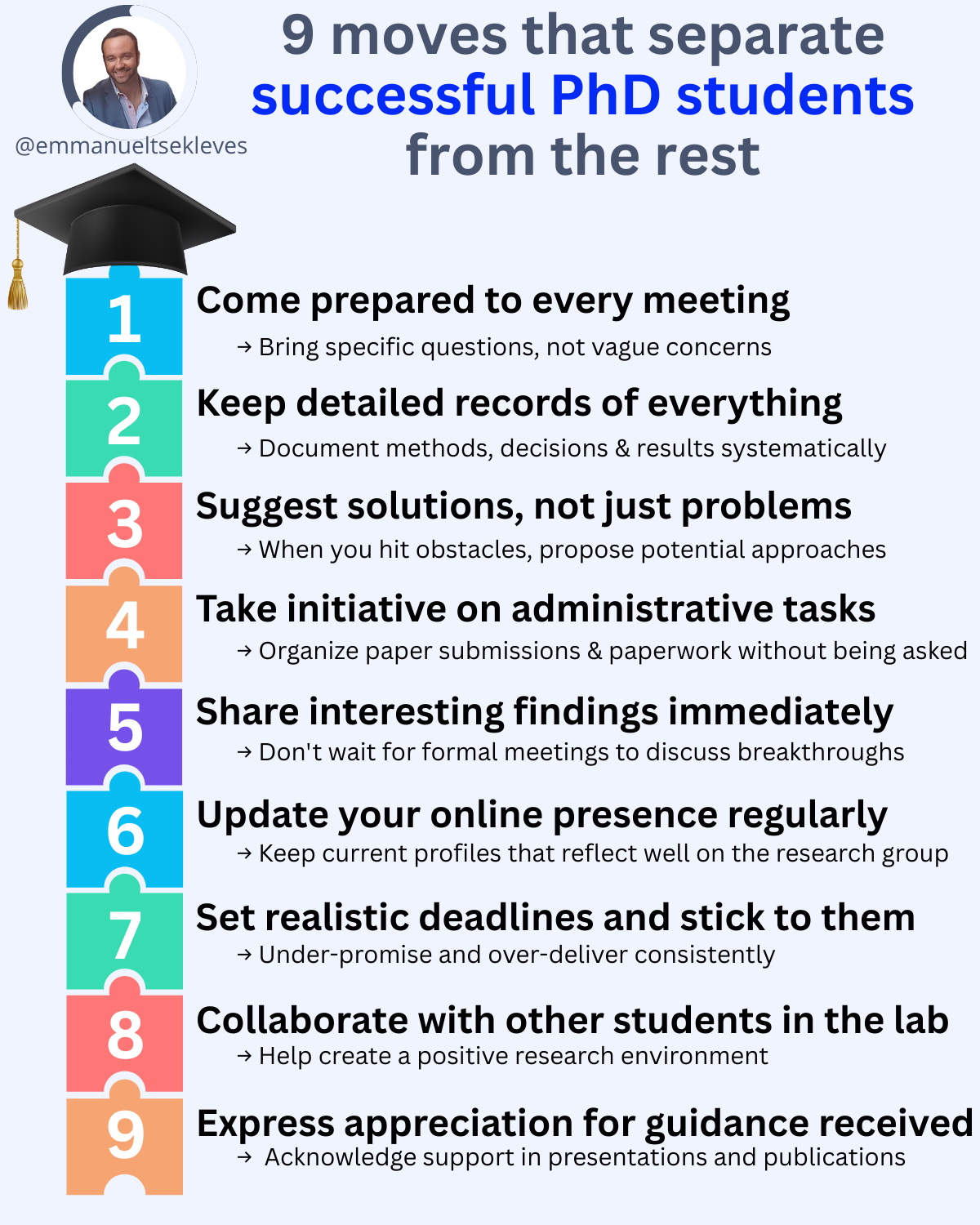
- Come prepared with specific questions and proposed solutions rather than vague problems for your advisor to solve
- Provide regular progress updates to keep your advisor informed without requiring extra meetings
- Ask for targeted feedback on specific aspects rather than general comments on your work
→ Your Action Plan for This Week
- Prepare a specific agenda for your next advisor meeting with 2-3 focused discussion topics
- Start sending brief weekly progress updates highlighting your accomplishments and next steps
- Practice asking for targeted feedback on one specific aspect of your current work
What's your biggest challenge in communicating with your PhD advisor? Reply and share your specific situation!
Well, that’s it for today.
See you next week.
Whenever you're ready, there are 3 ways I can help you:
1. Get free actionable tips on how to complet your PhD and secure a tenure-track job in academia by following me on X, LinkedIn me Instagram and BlueSky
2. Take my proven Academic Job Accelerator Program that has helped hundreds of researchers secure academic positions, and start with my free training videos to learn the exact strategies hiring committees respond to.
3. Join my Premium 1:1 PhD Mentorship Program. I provide exclusive, results-driven support for professionals who need fast-track guidance on proposals and thesis completion. DM or email me to learn more about this premium consultancy for serious professionals ready to succeed quickly.

Responses